
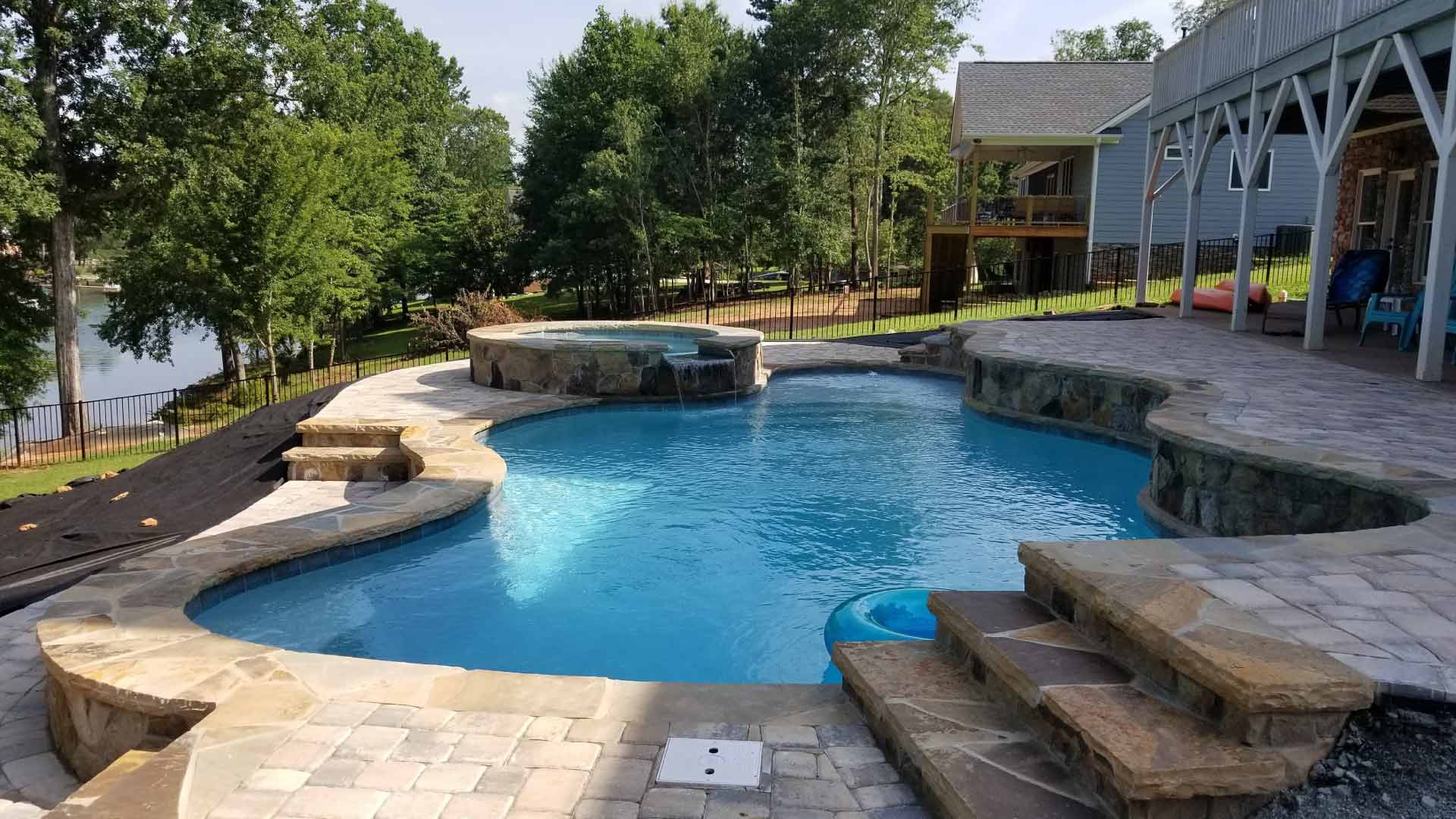
For families in Sherrills Ford and around Lake Norman, owning a swimming pool represents more than just a backyard feature, and a Low-Maintenance Poolscape can make this experience much more enjoyable. It becomes a gathering place for summer memories, a space for exercise, and a natural extension of your living area. However, the reality of pool ownership often includes concerns about time-consuming maintenance, chemical balancing, cleaning schedules, and the ongoing commitment required to keep water sparkling and safe.
The good news is that modern pool design has evolved significantly. Today’s low maintenance poolscape solutions combine thoughtful planning, strategic material choices, and smart technology to dramatically reduce the time and effort families spend on pool upkeep. Whether you’re planning a new installation or considering ways to simplify your existing pool care routine, understanding the options available can transform your pool from a demanding responsibility into an enjoyable asset that fits seamlessly into your busy lifestyle.
Understanding What Makes a Pool Low Maintenance
Before exploring specific design elements, it’s helpful to understand what drives pool maintenance demands. Traditional pools require regular attention to several key areas: water chemistry balance, surface cleaning, filter maintenance, debris removal, and equipment monitoring. Each of these tasks takes time and requires some level of knowledge.
A low maintenance pool Sherrills Ford NC reduces demands in these areas through intentional design choices. This doesn’t mean eliminating all maintenance tasks, as every pool requires some level of care. Rather, it means selecting features and systems that automate routine tasks, resist common problems, and minimize the frequency of hands-on intervention needed.
The Lake Norman area presents specific considerations that influence maintenance needs. The region’s climate brings warm, humid summers that encourage algae growth and heavy pollen seasons that deposit debris into pools. Local soil conditions, surrounding vegetation, and typical weather patterns all factor into creating a truly low-maintenance design for this specific location.
Choosing the Right Pool Surface Materials
The surface material you select for your pool significantly impacts long-term maintenance requirements. Different materials have distinct characteristics regarding cleaning ease, durability, and resistance to staining or algae growth.
Fiberglass pools have gained popularity partly because of their smooth, non-porous gel coat surface. This gel coat naturally resists algae attachment better than porous surfaces, meaning less scrubbing and fewer chemicals needed to maintain clear water. The smooth finish also makes routine cleaning faster since dirt and debris don’t cling as stubbornly. Many families appreciate that fiberglass surfaces typically require resurfacing far less frequently than other materials.
Aggregate finishes on concrete pools offer another option worth considering. These surfaces combine small stones or pebbles with plaster, creating a textured but relatively smooth finish that’s more durable than standard plaster. Quality aggregate finishes can last significantly longer before needing replacement, and their slightly rougher texture often hides minor staining better than smooth surfaces. When working with concrete pool builders near me, discussing aggregate options provides insight into surfaces designed for easier long-term care.
Strategic Pool Shape and Size Considerations
The physical design of your pool affects maintenance more than many people realize. While aesthetic preferences certainly matter, incorporating practical considerations into your pool’s shape and dimensions can significantly reduce upkeep demands.
Geometric shapes with clean lines typically require less maintenance than freeform designs with multiple curves and nooks. Corners and curved areas can trap debris and create spots where algae may establish more easily. Simpler shapes also make automatic pool cleaners more effective, as these devices can navigate straightforward layouts more efficiently.
Size matters too, though not always in the way you might expect. A larger pool obviously contains more water to treat and more surface area to clean. However, an overly small pool in proportion to the number of users may require more frequent chemical adjustments and experience faster water quality degradation. Finding the right balance for your family’s typical use creates a pool that’s easier to maintain.
Automation Systems That Save Time and Effort
Technology has revolutionized pool ownership, and pool automation NC systems now handle many tasks that once required daily attention. Understanding available automation options helps you make informed decisions about which systems provide the best value for your family’s situation.
Automatic pool cleaners represent the most impactful automation for most families. These devices continuously patrol your pool, removing debris and brushing surfaces without any effort on your part. Several types exist, including suction-side, pressure-side, and robotic cleaners. Robotic cleaners generally provide the most thorough cleaning with the least impact on your pool’s filtration system, though they represent a higher initial investment.
Filtration Systems and Water Quality
The type of filtration system your pool uses dramatically affects how much maintenance you’ll perform. Three main filtration types serve residential pools: sand filters, cartridge filters, and diatomaceous earth (DE) filters. Each has distinct maintenance requirements and effectiveness levels.
Sand filters are the most common and generally require the least frequent attention. Sand media typically lasts five to seven years before replacement, and the filter itself simply needs periodic backwashing to clean out trapped debris. This straightforward maintenance makes sand filters popular for families prioritizing simplicity.
Cartridge filters require no backwashing, which conserves water. The cartridges need removal and cleaning several times per season, and replacement every few years depending on usage. Some families find the cleaning process manageable and appreciate the water savings, while others prefer the even lower maintenance of sand filters.
Landscaping Considerations Around Your Pool
The environment immediately surrounding your pool influences how much debris ends up in the water and how much cleaning you’ll need to perform. Strategic landscaping choices create a more manageable pool area without sacrificing beauty or function.
Tree placement requires careful thought. While trees provide wonderful shade and aesthetic appeal, certain species shed more leaves, flowers, seeds, or pods than others. Deciduous trees that drop leaves in fall can create weeks of heavy debris. Even evergreens drop needles continuously throughout the year. Positioning trees where prevailing winds carry debris away from the pool rather than toward it reduces the amount of organic matter that ends up in your water.
For a family-friendly pool Lake Norman area design that minimizes maintenance, consider the specific plants you include near the water. Native plants adapted to local conditions typically require less care themselves and often shed less problematic debris. Ornamental grasses, many flowering shrubs, and groundcovers can create attractive poolscapes without generating excessive cleanup demands.
Energy-Efficient Equipment and Cost Savings
While energy efficiency might seem separate from maintenance concerns, they connect closely. Energy-efficient equipment typically represents newer technology that often includes features making pools easier to maintain. Additionally, reduced operational costs offset some of the investment in quality systems that minimize maintenance demands.
Variable-speed pumps, mentioned earlier in the automation section, exemplify this connection. These pumps can reduce energy consumption by up to 75 percent compared to older single-speed models, saving hundreds of dollars annually in electricity costs. That ongoing savings helps justify the investment in other low-maintenance features like robotic cleaners or chemical automation.
LED pool lighting has largely replaced older incandescent and halogen bulbs. LED lights consume far less energy and last significantly longer, meaning you’ll replace them far less frequently. This longevity reduces the maintenance task of changing underwater light bulbs, which can be complicated depending on your pool design.
Maintenance-Friendly Pool Features and Accessories
Beyond the major systems and design elements, various features and accessories can make routine pool care easier for busy families.Skimmer baskets with fine mesh liners catch more debris before it reaches the filtration system, reducing filter load and making basket cleaning faster. Some advanced skimmer designs improve water circulation patterns, helping surface debris reach the skimmers more efficiently.
Main drain positioning affects circulation and debris removal. Properly placed main drains help prevent dead spots where debris settles and algae may grow. When designing an easy pool design NC layout, ensuring optimal drain placement supports better water circulation with less manual intervention needed.
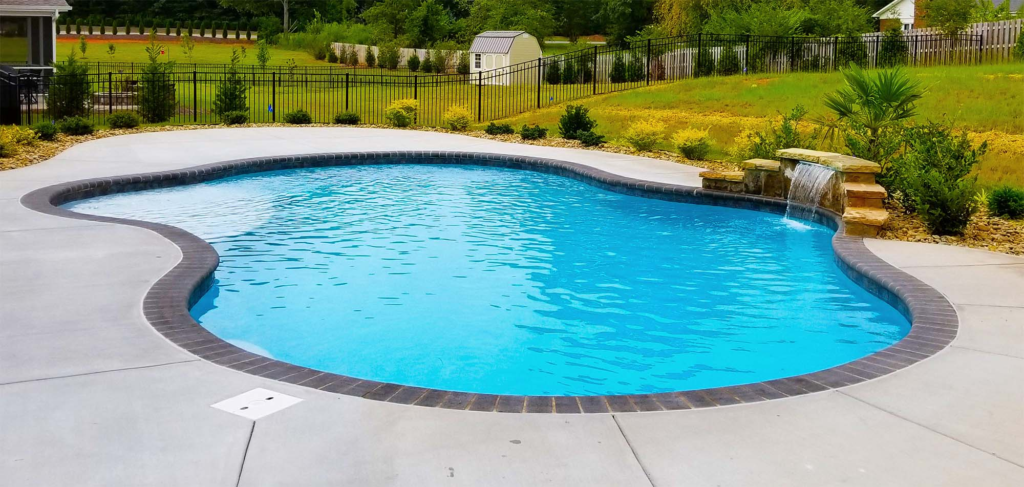
Pool covers serve multiple maintenance-reduction purposes. A safety cover kept on the pool when not in use prevents debris accumulation, reduces chemical usage by blocking sunlight that promotes algae growth, and minimizes water evaporation. Automatic covers make using a cover far more practical for daily use since you don’t need to manually pull and secure a heavy cover each time you finish swimming.
Comparing Maintenance Requirements Across Pool Types
Understanding how different pool types compare in terms of maintenance demands helps families make informed decisions during the planning phase.
| Pool Type | Surface Maintenance | Chemical Usage | Equipment Complexity | Long-Term Upkeep |
| Fiberglass | Low – smooth surface resists algae | Lower than average | Moderate | Minimal surface maintenance; gel coat lasts decades |
| Concrete/Gunite | Moderate to high – porous surface needs regular brushing | Higher than average | Moderate to high | Surface requires replastering every 10-15 years |
| Vinyl Liner | Low to moderate – smooth surface | Average | Low to moderate | Liner replacement every 7-10 years |
This comparison provides general guidelines, but specific maintenance experiences vary based on numerous factors including water chemistry management, local climate, usage patterns, and the quality of installation and equipment. A well-designed low maintenance pool Sherrills Ford NC installation of any type will perform better than a poorly planned one.
When families consider working with a swimming pool contractor newton or in any other location, asking about the contractor’s experience with low-maintenance designs and their recommendations for minimizing upkeep provides valuable insights. Experienced contractors can share what they’ve observed regarding which combinations of features and systems yield the best results for families seeking minimal maintenance demands.
Creating Your Maintenance Routine
Even with the most low-maintenance design possible, some routine attention keeps your pool in optimal condition. Establishing an efficient routine prevents small issues from becoming larger problems requiring more intensive intervention.
Daily tasks should be minimal with a well-designed system. A quick visual check ensures equipment is running properly, and a few minutes with a skimmer net to remove any large debris floating on the surface helps keep water clear. With good automation, this might represent the extent of your daily involvement.
Weekly tasks typically include checking water chemistry if you don’t have automated monitoring, cleaning skimmer baskets, and ensuring your automatic cleaner is functioning properly. Many families find that dedicating 15-20 minutes on a weekend morning to these tasks keeps the pool in excellent condition.
Working with Professional Pool Services
Partial service arrangements handle specific tasks while leaving others to homeowners. Common arrangements include weekly cleaning and chemical service while families handle daily skimming and equipment monitoring. This middle-ground approach reduces costs while still providing professional expertise for the more technical aspects of pool care. To learn more about professional pool maintenance options or to schedule a consultation, visit us today and get in touch with our team today.
Periodic consultations with pool professionals can benefit even those handling all their own maintenance. An annual inspection and water quality analysis helps ensure your systems are functioning optimally and identifies any emerging issues before they become expensive problems. These check-ups represent relatively minor investments that can prevent major repair costs down the road.
For families working with a denver pool builder or contractors in other locations, discussing the total cost of ownership over ten or fifteen years rather than just construction costs provide a more complete picture. A pool that costs slightly more to build but significantly less to maintain often represents better value than a cheaper pool with higher ongoing demands.
Frequently Asked Questions
1: What makes a pool low-maintenance in Sherrills Ford, NC?
A low-maintenance pool uses features like automated cleaners, chemical automation systems, proper filtration, durable surface materials, and smart landscaping to reduce the time and effort needed for upkeep.
2: Which pool surface material is easiest to maintain?
Fiberglass is generally the easiest to maintain due to its smooth, non-porous gel coat that resists algae growth. Vinyl liners and aggregate concrete finishes can also be low maintenance depending on usage and local conditions.
3: How does pool automation help reduce maintenance?
Automation systems, such as robotic cleaners, chemical feeders, and smart pool controllers, handle tasks like cleaning, water balance, and circulation automatically, saving time and ensuring consistent water quality
4: Can landscaping reduce pool maintenance?
Yes. Choosing low-debris plants, positioning trees away from the pool, and using hardscaping around the deck minimize leaves, pollen, and dirt entering the water, reducing cleaning needs.
5: Is a low-maintenance pool more expensive to install?
While upfront costs for automation, quality surfaces, and durable equipment may be higher, these features save time, reduce chemical use, and lower long-term maintenance expenses, making them cost-effective over time.